Iván Waisman
English-Speaking Therapist in Spain, Online
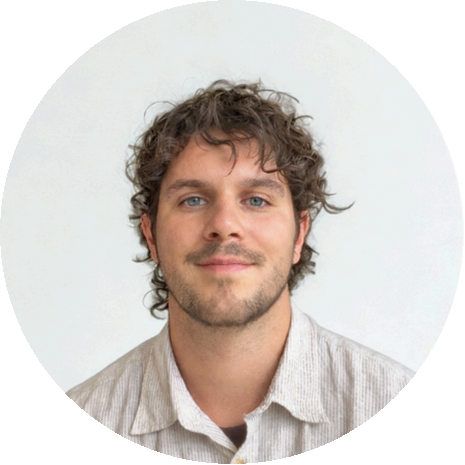
Hi! I'm Iván. I'm an English-speaking therapist and registered psychologist (COP-CAT 36779).
I work online, in English or Spanish, with people living all over Spain, so it doesn't matter which city, town or island you call home.
On this page I'll walk you through who I usually work with, how online sessions work and my fees. Feel free to book a first short meeting at no cost. My priority is to help you!
Who comes to me
Most people who come to my practice are very hard on themselves, and when they first write to me they usually name one of three things: perfectionism and self-esteem, anxiety, or difficulties in their relationships. Once we look closer, they usually come in a bundle, each one feeding the others.
Whether it's a student caught in procrastination and disorganisation, someone going through a big change at work or in their studies, or someone worn down by chronic stress who wants healthier habits back, from sleep to routines, what many of them share is needing practical tools and exercises to manage their emotions better.
Others come because they feel stuck, not doing things, and as if their lives had lost meaning.
Some arrive after working with therapists that weren't working for them, and I gladly take the time to understand what they need this time.
I also have pages on self-esteem and perfectionism and on anxiety therapy, if one of those is the main thing going on.
- Self-esteem
- Perfectionism
- Healthy relationships
- Anxiety
- Meaning in life
- Organisation, work and study
How online sessions work
Sessions with people around Spain are online, in English or Spanish, by video call on Google Meet, and they last 50 minutes. You'll need a device with a camera and microphone, a pair of earphones and a comfortable spot private enough to be honest and allow yourself to be vulnerable. Your comfort and your privacy come first, and you decide what to share and when.
Every session we build an agenda together. That means I ask first what you need or want from the session; sometimes you'll know, sometimes you won't. Don't worry, I'll always try to have something in mind. We try to keep it flexible because life can change one week to the next one, but keeping in mind to not miss our overall direction.
Once we know where to focus, whether it's something that's currently worrying you, or something you learnt or struggled with during the previous piece of homework, we do a "functional analysis", which simply means trying to understand more precisely what's going on and how to best address it. If we have time (depends on the session), we'll practice some skills or tools personalized to your situation (there are too many to name!) and you'll take a concrete exercise or complementary material into your week to practice or deepen your understanding of what was discussed in the session. Finally, we wrap up with main takeaways so you leave, whenever possible, with a greater sense of clarity.
There's more on the practical side on my page about online therapy in Barcelona.
Does online therapy work?
In my experience, for most of what people bring to my practice, the conversations, the exercises and the practice between sessions carry over to a video call very well, and the way we work doesn't change at all.
Online also means it doesn't matter where in Spain you live, and if you move cities or travel often, we can carry on without any issues.
It isn't the right place for an emergency, though. If you're in crisis, please call 112, or 024 for the suicide prevention line.
How I work
My main therapeutic approach is Acceptance and Commitment Therapy (ACT), a contemporary form of CBT grounded in scientific psychology and behaviour therapy.
In ACT we know that difficult emotions, even when they might appear to, are not the main problem, but us being controlled by them and leaving our lives aside is.
Our work together, then, is less about getting rid of what hurts, and more about learning to carry it skilfully while building a life that you feel is truly meaningful. My goal is for therapy to help you live more freely and become the leader of your own life.
That doesn't mean that pain will not go away. On the contrary, pain usually does fade away on its own whilst we're focused on leading a fulfilling life and learning to manage its difficulties. For most psychological problems, especially complex ones, our suffering will not go on its own. But also not whilst fighting it. A peaceful and fulfilling life is often the result of putting in the effort of learning new ways of living and relating to ourselves.
Therapy in your own language
Sessions are in English or in Spanish, whichever feels more like home, so the difficult conversations never have to happen in a language that still takes effort.
I left my hometown about ten years ago and have lived in several countries since, so living between languages and homes is part of my own story too. I know firsthand that putting feelings into words can feel different in a second language, and I take that into account in how we work together. I was educated in English (Cambridge C1 Advanced), and language has rarely been an obstacle with my English-speaking clients, native speakers included. I'm a native Spanish speaker, proficient in English, and I understand some basic Dutch. You're welcome to bring in words from your own language, especially when they say something English can't. If I don't know a word, we can explore it together.
If you moved to Spain from abroad, I also have a page on therapy for expats in Barcelona.
Registered psychologist
I'm a registered psychologist in Barcelona (COP-CAT 36779) and in Argentina (CPZA 2876).
I studied for a Licentiate Degree in Psychology in Argentina, spent two years training for an International Diploma in Contextual Behavioural Psychotherapies (ACT, DBT and FAP among them) and then earned a Master's Degree in General Health Psychology in Spain, by homologation of my Licentiate.
Fees and the first call
I want to make sure that income or time are not an obstacle for you to continue your process. That's why I try to adapt both my fees and schedule to match your needs (more on that on my intake form). As for frequency, most studies on psychotherapy are on a weekly basis, so that's the suggested starting point; but it's not an obligation: you can come at your own rhythm.
I gladly offer a first short meeting at no cost to see if we get along and to answer any questions you might have regarding my approach or your specific situation.
Questions people ask
Does Spain have therapy for English speakers?
Yes. In the larger cities some psychologists see people in English both online and face to face. I'm part of therapists' networks in Barcelona, Europe, Argentina and across the world, and regularly rely on them for trainings, referrals and good company. This means you're not in my hands only but in a larger community of trusted mental-health professionals that get together to help.
What happens if the connection fails?
Very rarely, in my experience, and restarting the call or moving to a spot with a stronger signal usually solves it. If nothing helps, we can carry on with audio only, as an exception, or find another time for the session.
How much does a therapy session cost in Spain?
My sessions cost an estimated €40 to €75 for 50 minutes, and your exact fee is worked out in my intake form, based on your situation.
How can I check a therapist is registered?
Ask for their registration number and the college it belongs to, and look them up on that college's public register (mine is COP-CAT 36779, linked above). If you live in Barcelona, there's a page written for you: English-speaking psychologist in Barcelona.